
Summer Program
You Can’t Learn Peace from a Distance: Why Lived Experience Matters
Peace and conflict studies may be global in subject, but it is far from global in authorship. In many programs, the majority of assigned readings still come from scholars based in the Global North, often exceeding 70–80% in related fields like peace and conflict transformation and international relations. A quick review of reading lists from three or four leading education institutions shows that while conflicts in the majority world are widely studied, the core texts assigned to students are overwhelmingly authored by scholars based in Europe and North America. This dynamic points to a persistent system of epistemic inequality and knowledge extraction, where communities that endure conflict are positioned as subjects of study rather than as producers of theory.

Until this academic gatekeeping is challenged, peacebuilding risks reproducing the very power imbalances it seeks to transform.
Academic spaces have often been inaccessible to the grassroots practitioners who do the on-the-ground work of peacebuilding. While peacebuilding scholarship itself has been a more recent development, there is no shortage of scholars and scholar-practitioners who have authored many important pieces of writing from the majority world.
Academic spaces have often been inaccessible to the grassroots practitioners who do the on-the-ground work of peacebuilding. While peacebuilding scholarship itself has been a more recent development, there is no shortage of scholars and scholar-practitioners who have authored many important pieces of writing from the majority world.
There is something fundamentally different about studying peacebuilding in a country that has known war. In places like Sri Lanka, peace is not an abstract concept or a theory to be grappled with within hallowed halls. It is layered with lived experiences, coexisting with multiple cycles of violence within the complexity of diversity. Sri Lanka is a nation still negotiating “peace” and “reconciliation” sixteen years after the end of the armed conflict. In some parts of the North, where the war was most deeply felt, time seems almost suspended, walls still bear bullet marks, and monuments reveal how memory itself remains contested.
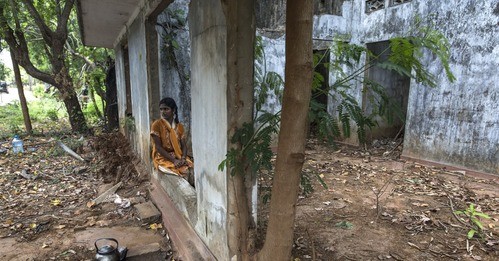
This is what makes programs like the Global Unites Summer Program important. It offers a space for dialogue about these large and often charged terms such as reconciliation. While many scholars such as Lederach and Galtung offer foundational theories and insight into peace and conflict, the way it translates in real-life conflict contexts are an imperative part of scholarly discourse, and who better than those who live and grapple with these in those contexts. If peacebuilding is only taught through distant frameworks, it remains incomplete. This program takes a different approach by placing learning within a post-war context and treating lived experience as a core source of knowledge.
They create space for dialogue around large and often contested terms such as reconciliation. While scholars like John Paul Lederach and Johan Galtung offer foundational theories and insights into peace and conflict, how these ideas are lived, negotiated, and sometimes resisted in real conflict contexts is an essential part of scholarly discourse. Those who continue to live within these realities are not just participants in peacebuilding; they are critical producers of knowledge. This knowledge cannot just be added to case studies but is integral material in academic courses.
They create space for dialogue around large and often contested terms such as reconciliation. While scholars like John Paul Lederach and Johan Galtung offer foundational theories and insights into peace and conflict, how these ideas are lived, negotiated, and sometimes resisted in real conflict contexts is an essential part of scholarly discourse. Those who continue to live within these realities are not just participants in peacebuilding; they are critical producers of knowledge. This knowledge cannot just be added to case studies but is integral material in academic courses.
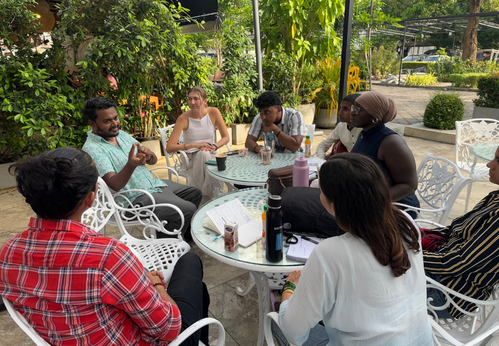
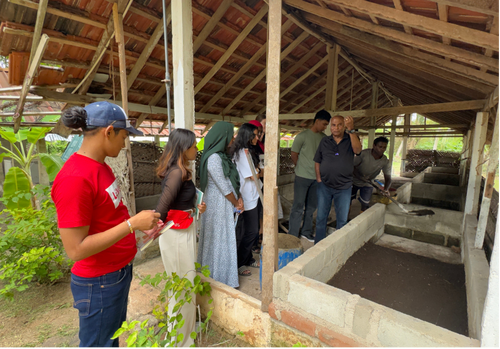
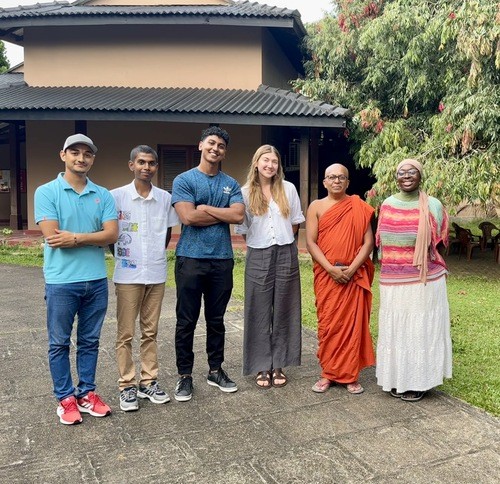
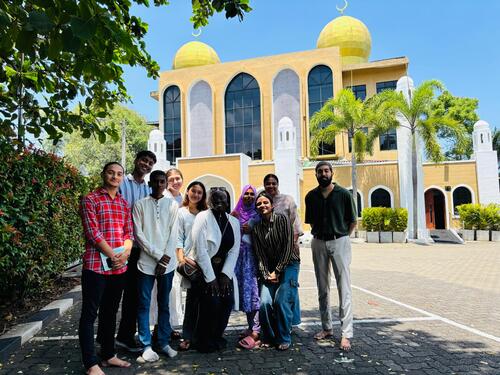
Throughout the Global Unites Summer Program, we intend to create not just a physical space, but intellectual and emotional spaces where students can grapple with these contested concepts and interact within a dynamic space of a country grappling with its own past.
If you are interested in learning more, please visit our website: https://www.globalunites.org/school-of-peace
If you are interested in learning more, please visit our website: https://www.globalunites.org/school-of-peace
Posted in Blog